Middle School (Grades 5-8)
WTA’s Middle School curriculum is designed to help students develop essential executive function and critical thinking skills while supporting their academic, social, and emotional growth. Students practice goal setting, self-direction, collaboration, and problem solving, while gaining a better understanding of how they learn best.
The Judaic Studies curriculum relies on a Beit Midrash model that encourages respectful questioning while improving Hebrew fluency and comprehension. Each student works closely with a mentor teacher who supports their middle school journey, both academically and with respect to their social-emotional needs.
Our dynamic general studies curriculum sparks curiosity through hands-on, project-based learning. In English, History, and Science, students tackle real-world challenges, analyzing literature, reenacting history, and conducting investigations to build critical thinking and communication skills. Math instruction builds strong foundations, advancing through Pre-Algebra to Algebra 1 by 8th grade. Students leave ready for high school — and ready to lead.
General Studies
-
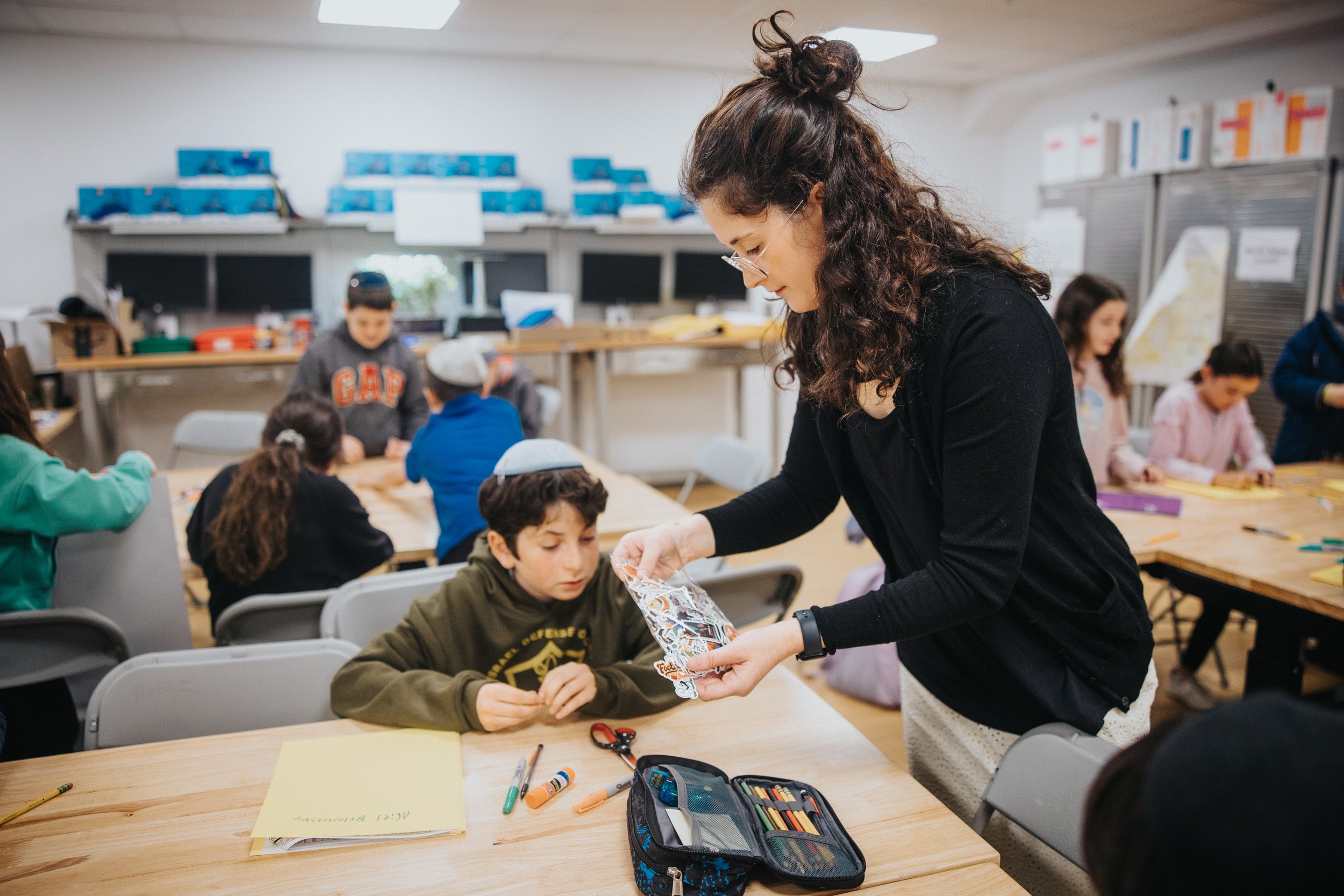
Westchester Torah Academy’s Middle School General Studies program is intentionally designed to meet students where they are while preparing them for the academic rigor of high school and success beyond the classroom. Rooted in child-centered, Project-Based Learning (PBL), our curriculum fosters curiosity, critical thinking, and independence. Students are active participants in their learning—asking questions, solving problems, collaborating with peers, and presenting their ideas with confidence.
A Project-Based, Student-Centered Approach
Across all subject areas, students engage in Project-Based Learning experiences that increase motivation, deepen understanding, and strengthen long-term retention of content. Through authentic projects, students consistently practice reading, writing, listening, and speaking in alignment with Common Core standards. Presentation and reflection are key components of learning, helping students articulate their thinking and take ownership of their growth. This approach also allows teachers to differentiate instruction, identify individual strengths and areas for growth, and support every child in becoming a stronger, more confident learner.
-
Middle School is gradually departmentalized to support students’ developmental and academic transitions.
Grade 5 serves as a bridge between Lower School and Middle School. Students begin departmentalization with differentiated math and an integrated humanities block, easing them into new expectations while maintaining strong academic support.
Grade 6 and beyond are fully departmentalized, with students rotating through core subject areas: English Language Arts, History, Math, and Science.
Through thoughtful design, strong academic expectations, and a child-centered approach, WTA’s Middle School General Studies program equips students with the skills, confidence, and curiosity they need to thrive in high school and beyond.
-
The Middle School ELA program follows a spiraled model, with increasing expectations for analytical thinking, writing structure, and independence each year. Students engage in in-depth novel studies, poetry, short stories, and nonfiction texts, learning to identify themes, analyze character and author’s craft, and respond thoughtfully to complex ideas.
Students read a wide range of award-winning, high-quality literature across genres and time periods. Literature serves as the foundation for multiple forms of writing, including narrative, persuasive, expository, and descriptive writing.
Writing expectations build steadily:
Grade 5: 1–2 paragraph responses focused on clarity and organization
Grade 6: 2–4 paragraph compositions emphasizing evidence and explanation
Grade 7: 3–4 paragraph analytical pieces with stronger structure and depth
Grade 8: 4–5 paragraph essays featuring a clear thesis statement, effective transitions, and well-supported arguments
By eighth grade, students are able to independently craft a cohesive five-paragraph essay—skills essential for high school academic success.
-
Middle School math emphasizes conceptual understanding and real-world application. Rather than rote memorization, students develop strategies by solving meaningful problems and understanding why mathematical concepts work.
Grade 5: Dimensions Singapore Math, focusing on fractions, decimals, volume, and order of operations
Grades 6–7: Reveal Math (McGraw Hill, 2025), introducing ratios, percentages, algebraic reasoning, geometry, and applied problem-solving
Grade 8: Algebra (Illustrative Mathematics), including linear and quadratic equations, systems, inequalities, and introductory statistics
Many students enter high school with Algebra as a review—or the opportunity to place out—due to this strong foundation.
-
Science at WTA is fully Project-Based, using the OpenSciEd curriculum. Students explore biology, chemistry, physics, and Earth science while mastering the scientific method. By eighth grade, students independently design experiments, collect and analyze data, and write full lab reports—preparing them for advanced high school science coursework.
Building on scientific method, middle schoolers explore real-life dilemmas, from extreme temperature survival to challenges of space travel. Students learn to think critically, ask questions, and devise proposals for how to address real issues.
This hands-on, inquiry-based program weaves together life, physical, and earth sciences, encouraging students to ask questions, investigate phenomena, and apply scientific thinking to real-world challenges. Through experiments, collaborative projects, and data-driven exploration, students build a strong foundation in science while developing curiosity, critical thinking, and problem-solving skills.
-
History at WTA is taught through inquiry, discussion, and Project-Based Learning, helping students connect past events to their own lives and the modern world. Following the New York State curriculum, students analyze primary and secondary sources, compare perspectives, and write evidence-based historical arguments.
Grade 5: Humanities as a Bridge to Middle School
In fifth grade, history is taught through an integrated humanities block that combines social studies and English Language Arts. Students explore immigration through both factual texts and literature, examining how immigration has shaped U.S. history while connecting these themes to personal and family stories. The year culminates in a student-centered family immigration project, building on students’ fourth-grade study of U.S. states and early American history while introducing higher-level research, writing, and presentation skills.
Grades 6–8: Historical Inquiry and Analysis
Grade 6: Ancient civilizations, including Mesopotamia, Egypt, Greece, and Rome
Grade 7: U.S. History from pre-colonial times through the Civil War
Grade 8: U.S. History from the Civil War to the modern era
This progression prepares students for the depth and rigor of high school history courses.
Judaic Studies
-
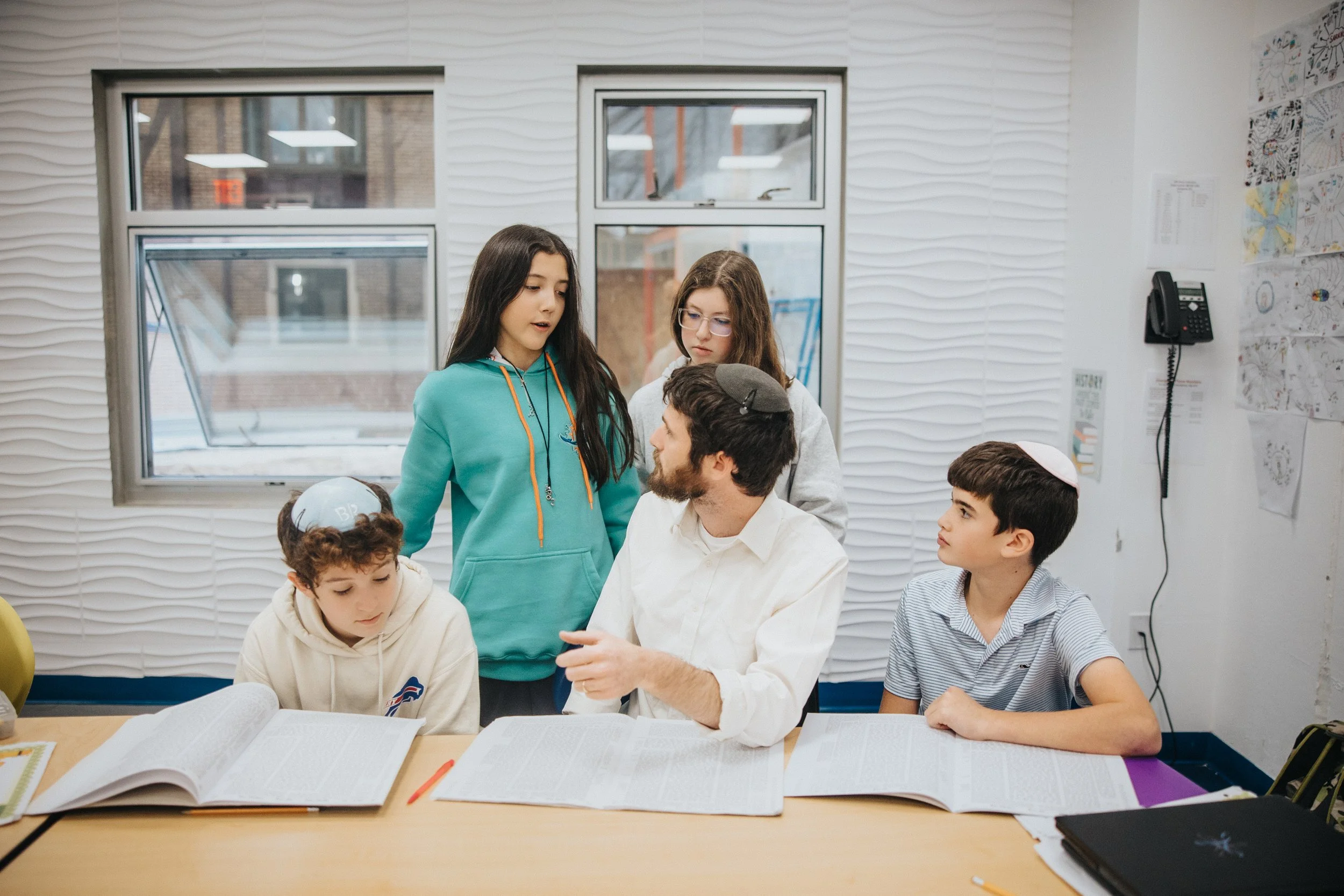
In Middle School, Judaic Studies at WTA is taught in a Beit Midrash–style model, where students rotate through core Judaic subjects in focused 20-minute learning intervals. This structure allows students to learn each discipline with peers at a similar instructional level, enabling targeted skill development, meaningful differentiation, and deeper engagement with texts. Across all subjects, students are challenged to think critically, read carefully, and articulate ideas clearly—preparing them for advanced Torah learning in high school and beyond.
Our Torah learning is characterized by intellectual rigor and deep respect for sacred texts and rabbinic interpretations, alongside structured opportunities for questioning, analysis, and discussion. Students learn how to engage primary sources carefully, build arguments rooted in text, and understand the continuity of Torah across generations.
Importantly, WTA’s Judaic curriculum is spiral-based, building knowledge and skills progressively over the course of schooling. By the time students graduate Middle School, they have learned all five sefarim of Chumash, key halachot of daily life and Shabbat, core Yediot Klaliyot, basic terminology and reasoning skills for Mishna and Gemara, and foundational concepts for studying these core texts. This deliberate progression ensures that each year deepens understanding while connecting to prior learning, creating confident, independent learners equipped for future success.
Through this child-centered, Beit Midrash-based approach, Middle School Judaic Studies at WTA cultivates knowledgeable, thoughtful, and committed learners—students who not only know how to learn Torah, but who carry a genuine Ahavat Torah forward into high school and throughout their lives.
-
In Middle School, students advance to the Ulpan Or curriculum, building strong reading, writing, listening, and speaking skills while exploring Israeli culture. Through acclaimed books like the Dod Aryeh series, songs, poetry, and class presentations, students practice Hebrew in meaningful, real-world contexts.
Our classes are leveled to meet each student where they are, allowing for differentiated instruction and steady progress. While Ivrit is woven throughout our Judaic studies, this focused curriculum ensures students gain fluency, confidence, and a deep appreciation for Israeli language and culture—preparing them to thrive as knowledgeable, engaged members of the global Jewish community.
-
By the time students enter Middle School at WTA, they have completed the study of Sefer Bereishit and have developed foundational skills in learning Chumash. In Middle School, students alternate years studying the remaining sefarim of the Torah, with the goal that by graduation they will have engaged with all five sefarim in a meaningful and developmentally appropriate way.
Students engage in in-depth study of Chumash with Rashi and other classical mafarshim, developing skills in close reading, textual analysis, and interpretation. Instruction emphasizes understanding peshat, identifying guiding questions in Rashi, and learning how classical commentators build meaning from the text. Students strengthen Hebrew reading fluency while learning to track story development, support interpretations with evidence, and express ideas clearly—both orally and in writing.
-
Navi study introduces students to the historical, ethical, and spiritual dimensions of Tanach. Students explore key narratives, leadership transitions, and moral challenges while learning how Navi functions as both history and prophetic message. Instruction focuses on contextual understanding, textual analysis, and connecting themes in Navi to Jewish values and lived experience.
-
In Mishna, students develop foundational skills in oral Torah learning. Beginning with Masechet Brachot and progressing to Bava Metzia, students learn how to read Mishnayot fluently, identify structure and key terms, and understand halachic reasoning. Emphasis is placed on comprehension, precision, and clarity of thought, laying the groundwork for Gemara learning.
Gemara study introduces students to the logic and methodology of Talmudic learning through carefully scaffolded exposure to sugyot in Pesachim and Bava Metzia. Students learn how to follow arguments, identify questions and resolutions, and engage respectfully with complex ideas. Instruction builds analytical thinking, perseverance, and confidence in navigating challenging texts.
-
Halacha is taught as a living system that shapes daily Jewish life. Students study practical halachic topics of daily Jewish life while learning how halacha develops from textual sources through rabbinic interpretation. This subject strengthens students’ understanding of Jewish practice and fosters personal responsibility, kavod, and informed observance.
5th & 6th Grade: Continuation of the esteemed Chayenu curriculum for Yediot Klaliot
7th & 8th Grade: In-depth study of Hilchot Shabbat
-
WTA is a centrist Modern Orthodox co-educational Yeshiva Day School. Halacha serves as the guiding force behind all decisions in our school, and our Hashkafa is consistent, transparent, and reflected throughout every aspect of our community.
In addition to Torah, mitzvot, and emunah in Hashem, the kedusha and centrality of Eretz Yisrael are at the heart of the WTA experience. Whether in tefillah, Torah learning, or developing fluency in Ivrit, the Land of Israel plays a central role in nurturing a strong, meaningful, and spiritually connected identity within each of our students.
Jewish life is infused in everything we do at WTA, reflecting our core value of Ahavat Torah — a love of Torah that guides our students’ learning, growth, and sense of community. Students celebrate milestones, like bar and bat mitzvahs, and actively engage in Jewish traditions throughout the year.
Each week, students participate in weekly parsha learning and take home special “Parsha Hunt” trivia sheets to complete on their own time or with their families. Middle schoolers help guide our monthly Rosh Chodesh Inter-Grade Learning , preparing lessons to teach younger students a different Jewish value each month. Daily enrichment includes daily dives into meaningful topics: exploring the teachings of notable rabbis, Judaism & Tech, studying the nuances of a tefillah, or participating in engaging programs like Friday’s Kushiya & Kugel, designed to make Jewish learning interactive and fun.
Students experience Jewish life beyond the classroom through special trips to historic and major Jewish sites including kivrei tzadikim and our annual tefillah ba’sadeh outing, hands-on holiday celebrations, and opportunities to bring ruach to the building. They lead divrei Torah and actively shape the communal experience of each chag.
Through these varied experiences, students develop a deep, lived connection to yahadut and kehilla, strengthening their knowledge, leadership, and commitment to Torah values that will guide them both within and beyond the WTA community.
Extracurriculars
-
All middle schoolers attend gym class 2-3 times a week to build strength, conditioning, and coordination. We are excited to partner with Pursuit of Perfection, powered by the expert trainers of North End Fitness & Training in New Rochelle, to lead WTA’s physical education program this year. With years of experience and a passion for health and wellness, their certified trainers will bring professionalism, energy, and care to a well-rounded P.E. curriculum for our students!
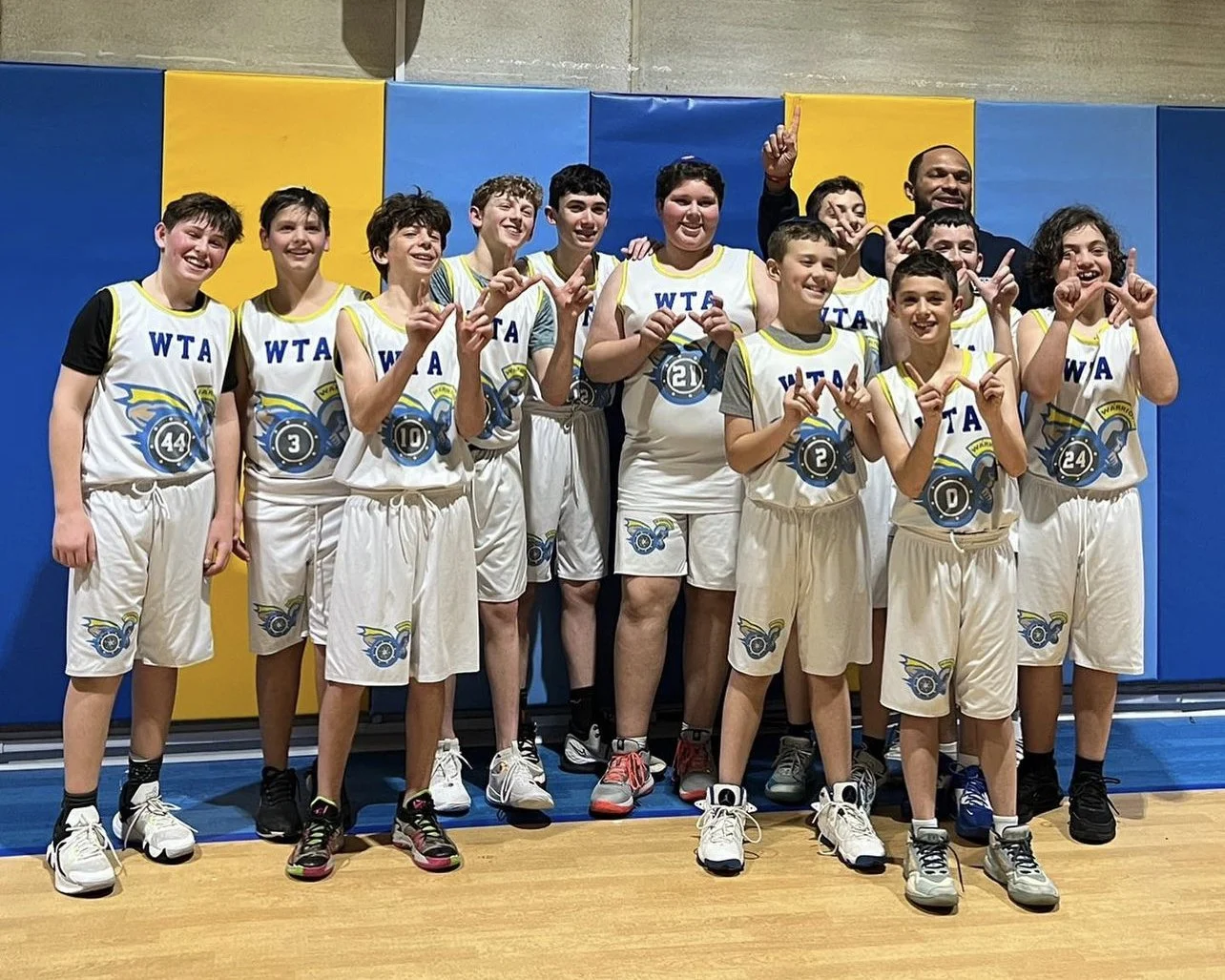
For students interested in team sports, WTA has basketball and soccer teams.
-
The whole school is involved in celebrating each bar and bat mitzvah, surrounding the student with love and joy. WTA facilitates the learning of Jewish ritual skills in our annual B'nai Mitzvah family event, grounding the process in our core values.
-
The vast majority of our students are admitted to their first choice High School. Administrators walk alongside student and family every step of the journey, helping students begin to envision who they want to become and identifying which schools align with their strengths, goals, and interests. The WTA team serves as guides for the students as they prepare for applications, interviews, essays, and school visits.
-
See more about our special Jewish Life programs and activities here!
Support Services
Sophie Dobin serves as our school social worker, addressing all social-emotional needs throughout the building. A graduate of Yeshiva University’s Wurzweiler School of Social Work, Sophie brings a combination of warmth, energy, and expertise to her work. She has hands-on experience supporting students in school settings, working side by side with teachers to help children thrive both academically and emotionally. Sophie is passionate about building trusting relationships and creating a safe, supportive space where every student feels heard and valued.
Ingrid Hauptman is the Director of Middle School Student Services. With a background in special education and IEP development, Morah Ingrid is deeply familiar with advocating for and implementing systems and services for student learning. Under Morah Ingrid’s leadership, students' needs are assessed, in consultation with both parents and teachers, to determine what supports would best meet each student’s needs. Morah Ingrid offers resources, group work, and one-on-one support for executive functioning, skill-based remediation, as well as general curricular support.
Rachel Mendelson, LCSW, is WTA’s Assistant Principal and oversees the Support Services staff and is available for student, teacher, and family support.