Lower School (Grades 1-4)
At WTA, our Lower School General Studies program is intentionally designed to build strong foundations while nurturing curiosity, confidence, and a love of learning. Skills and concepts are introduced thoughtfully, reinforced consistently, and expanded progressively—ensuring that new learning is always built upon a solid understanding of prerequisite skills.
Instruction is child-centered and data-informed. We administer MAP Growth assessments multiple times each year to track individual student progress, identify areas of strength and growth, and ensure our instruction aligns with and exceeds New York State benchmarks. This ongoing assessment allows our teachers to tailor instruction, group students thoughtfully, and provide targeted support or enrichment—ensuring that every child continues to move forward with confidence.
Through a carefully structured, project-based, and developmentally responsive approach, WTA’s Lower School General Studies program prepares students not only for Middle School, but for lifelong learning, critical thinking, and success beyond the classroom.
General Studies
-
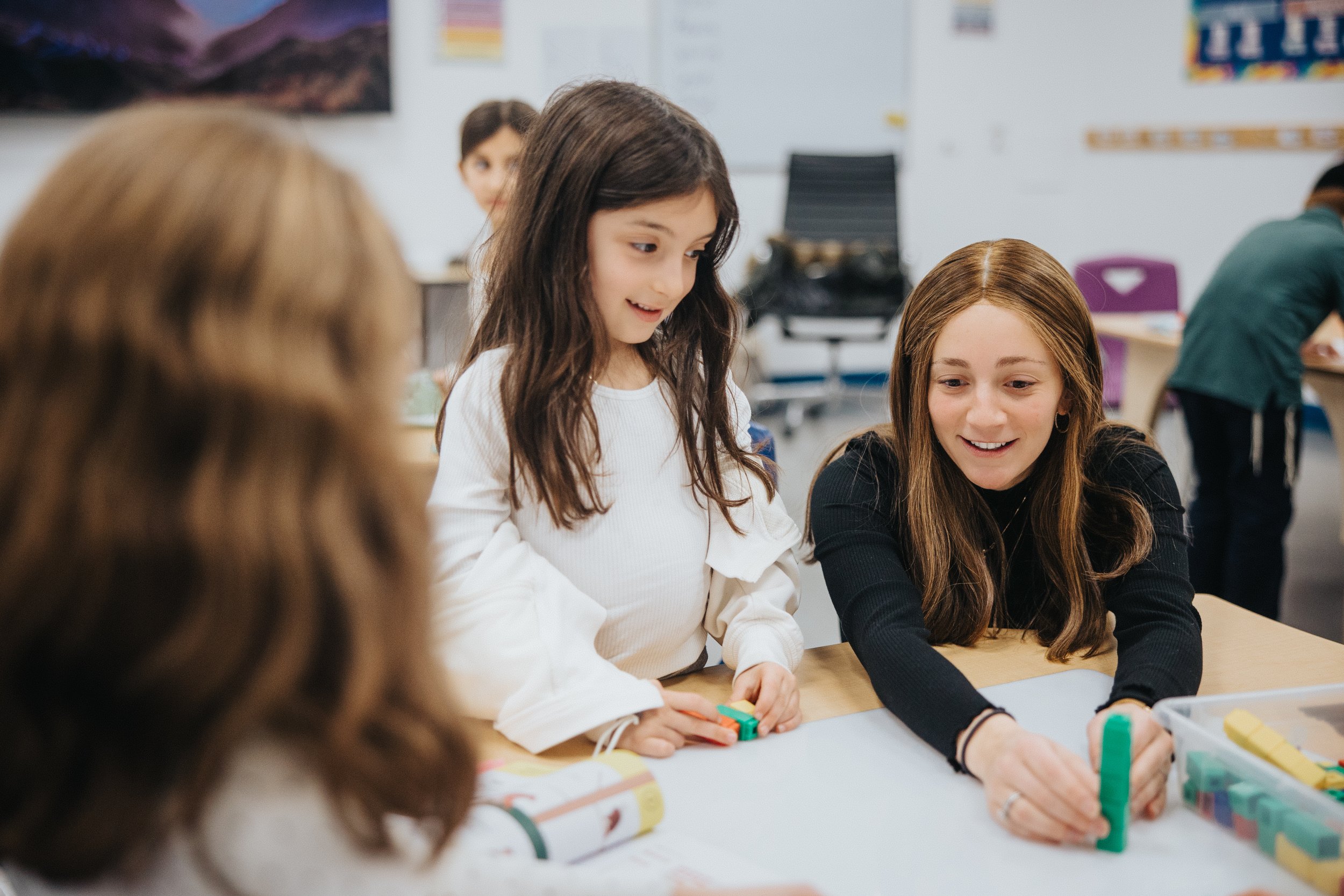
Our Lower School General Studies program is designed to meet each child where they are and help them grow with confidence and purpose. Instruction is rooted in a rotational model, allowing teachers to work with students in small, flexible groups based on readiness and skill level. This approach ensures that every child receives the right balance of support and challenge, with a strong emphasis on mastery, review, and reinforcement before moving on to new concepts.
To track growth and inform instruction, WTA administers MAP assessments three times a year, providing meaningful data on individual progress and benchmarking our students’ achievement against peers across New York State. Together, our instructional model and assessment practices ensure a thoughtful, responsive, and high-quality learning experience for every student.
-
Our ELA program follows the Science of Reading, emphasizing phonics, decoding, sight-word mastery, and fluency in the early grades, with a gradual shift from learning to read (Grades 1–3) to reading to learn as students mature.
Students develop comprehension skills—including prediction, inference, and analysis—across both fiction and nonfiction texts.
Writing instruction progresses from letter formation and sentence structure to paragraph writing by the end of 1st Grade.
In 2nd Grade, students publish their own books, using graphic organizers to brainstorm original ideas, create compelling characters, develop plotlines with problems and solutions and then write full narratives.
By 3rd & 4th Grades, students write multi-paragraph nonfiction essays and complete research-based writing projects that prepare them for Middle School expectations.
Poetry spirals throughout the grades, from simple rhymes to free verse, sensory poetry, metaphors, and idioms.
Technology enhances instruction through:
IXL, which allows teachers to individualize skill practice
Epic, providing leveled reading and exposure to diverse genres
EduTyping (beginning in Grade 3), preparing students for digital fluency
-
We use Singapore Math (Dimensions), a concept-based curriculum that emphasizes deep understanding over rote memorization. Students learn how math works through visual models, problem-solving, and real-world application.
Early grades focus on number bonds and foundational arithmetic
Upper grades build toward fractions, decimals, and early algebraic thinking
Instruction is supported by IXL (personalized practice) and ST Math, a visual, language-free program that strengthens conceptual reasoning and perseverance.
-
Science learning spirals through the grades, with a strong emphasis on the scientific method:
1st Grade: Observation, measurement, five senses, sinking & floating
2nd Grade: Life sciences, classification, metric measurement (culminating in a zoo trip)
3rd Grade: Space science and advanced measurement (planetarium experience)
4th Grade: Simple machines and engineering challenges, including Rube Goldberg-style projects
-
Social Studies spirals developmentally, expanding students’ understanding of community and the world:
1st Grade: Community & community helpers
2nd Grade: World cultures and global communities
3rd Grade: Influential historical figures
4th Grade: U.S. history, geography, and government
All Social Studies learning is project-based, integrating research, writing, organization, public speaking, and creativity. Signature projects include:
1st Grade: Community Project
2nd Grade: Book Publishing & Cultural Studies
3rd Grade: Wax Museum
4th Grade: State Fair
-
Students build essential digital skills including typing, document creation, image insertion, and presentations—supporting learning across all subject areas.
Technology enhances instruction through:
IXL, which allows teachers to individualize skill practice in math and reading
Epic, providing leveled reading and exposure to diverse genres
EduTyping (beginning in Grade 3), preparing students for digital fluency
Judaic Studies - לימודי קודש
-
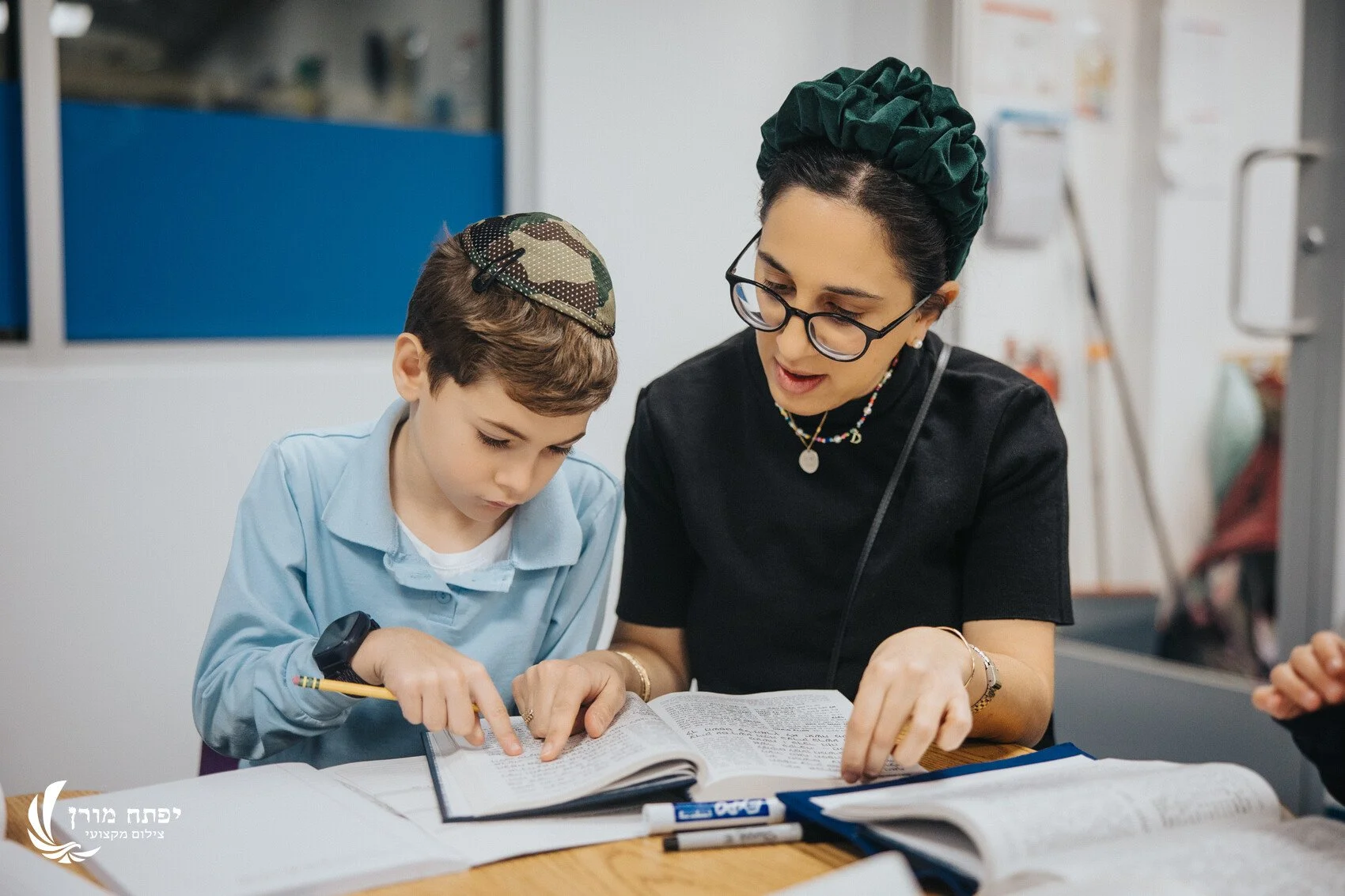
Our Judaic Studies classrooms blend traditional text learning with modern educational tools, guided by our core value of Ahavat Torah and a commitment to infusing Limudei Kodesh into the rhythm of daily life. Teachers use a combination of:
Structured curricula and workbooks
Text-based learning and discussion
Technology to support differentiation
Clear benchmarks to guide instruction and assessment
Our curriculum includes a spiraled focus on Yediot Klaliot through the Chayeinu program, beginning in 2nd grade and building year over year to develop strong general Jewish knowledge. This approach ensures that students build deep understanding alongside essential foundational skills in Torah, Ivrit, and Jewish literacy. Our goal is to cultivate a lasting connection to Torah, mitzvot, and Jewish identity — while equipping students with the skills, confidence, and curiosity to thrive in today’s world. Limudei Kodesh is taught fully Ivrit B’Ivrit.
-
At WTA, Hebrew is not treated as a subject alone — it is a lived language. Our Ivrit program follows the Italam methodology, an immersive, research-based approach that emphasizes that students are not “learning a language,” but living within it.
Using a combination of Italam workbooks, classroom immersion, and thoughtfully integrated technology, students develop strong skills in:
Hebrew reading, writing, and speaking
Vocabulary acquisition and comprehension
Alef-Bet foundations and decoding
Parashat HaShavua and Judaic content in Hebrew
Italam allows teachers to track student progress carefully and individualize instruction, meeting each child where they are and supporting growth at an appropriate pace and rhythm.
The kedusha and centrality of Eretz Yisrael are woven throughout our Judaic Studies program. Whether in tefillah, Torah learning, or developing fluency in Ivrit, the Land of Israel plays a central role in nurturing a strong, spiritually connected Jewish identity within each child.
-
Students begin their formal Judaic Studies journey by building joyful connections to Hebrew, tefillah, and Torah learning.
Hebrew letters and early word recognition
Foundations of Ivrit and language immersion
Tefillah and brachot
Parashat HaShavua and chagim
Mesibat Siddur, celebrating students’ growing connection to tefillah
-
Second grade marks an important transition into structured Torah text learning.
Ivrit through Italam (language, reading, writing, and speaking)
Deep Dives into Parashat HaShavua through workbooks, text study, and dramatic play
Expanding knowledge of Tefillah, brachot, and chagim
Choveret Hachana l’Chumash, preparing students for formal Chumash learning
Inside the Chumash: Learning Parshiyot Bereishit, Noach, Lech Lecha
Chayenu curriculum for Yediyot Klaliyot
Mesibat Chumash, celebrating students’ entry into Chumash learning
-
Third grade deepens textual skills and introduces students to classical commentary.
Ivrit through Italam (language, reading, writing, and speaking)
Deep Dives into Parashat HaShavua through workbooks, text study, and dramatic play
Expanding knowledge of Tefillah, brachot, and chagim
Chumash with Rashi: Learning Parshiyot Chayei Sarah, Toldot, Vayeitzei, as well as Rashi Script and Interpretations
Chayenu curriculum for Yediyot Klaliyot
Mesibat Rashi, celebrating students’ entry into Chumash learning with Rashi Interpretation
-
Fourth grade emphasizes independence, deeper comprehension, and broader Torah knowledge.
Ivrit Italam
Chumash with Rashi: Parshiyot Vayishlach, Miketz, Vayigash, Vayechi
Migdal Ohr curriculum for expanded Parashat HaShavua education
Exploring the meaning behind and halachot of Tefillah and Chagim
Chayenu curriculum for Yediyot Klaliyot
Introduction to Navi - Sefer Yehoshua
Mesibat Navi, marking an important milestone in Torah learning
Extracurriculars
-
All lower school students attend gym class twice a week to build strength, conditioning, and coordination.We are excited to partner with Pursuit of Perfection, powered by the expert trainers of North End Fitness & Training in New Rochelle, to lead WTA’s physical education program this year. With years of experience and a passion for health and wellness, their certified trainers will bring professionalism, energy, and care to a well-rounded P.E. curriculum for our students!
-
Our Lower School art curriculum invites students to explore art through the lens of different genres and renowned classical and modern artists, learning to observe, analyze, and appreciate artistic styles before creating their own original works. Children experiment with a wide range of techniques and materials, building both technical skills and creative confidence. Throughout the year — and especially around the chagim — art becomes a meaningful vehicle for learning, as students express themes, symbols, and ideas of each holiday through hands-on artistic creation.
-
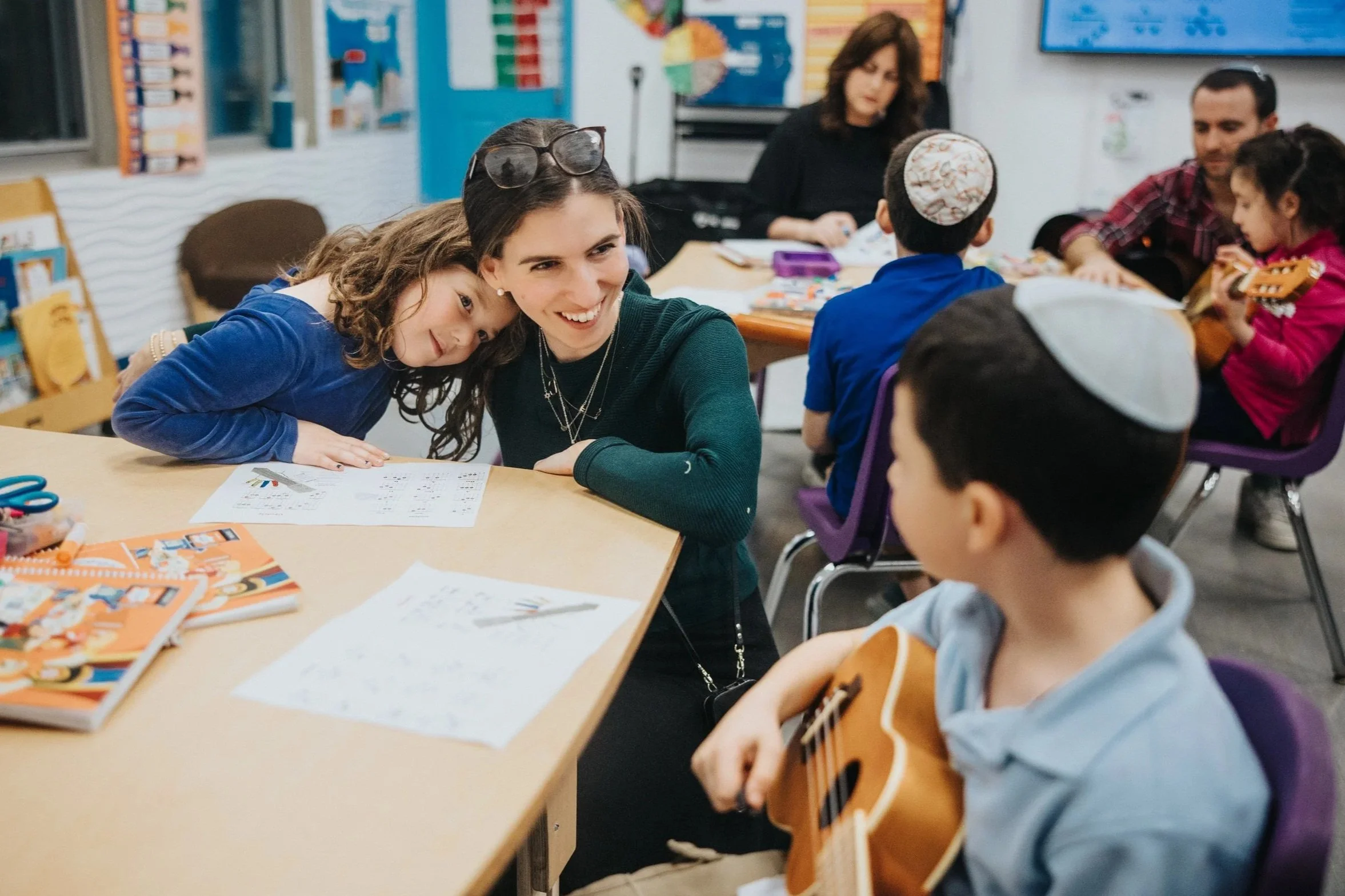
WTA’s Lower School music program provides students with a strong, joyful foundation in music, aligned with the New York State Learning Standards for the Arts. Through singing, movement, instrument playing, focused listening, and creative expression, students build music literacy while developing skills in rhythm, melody, harmony, and musical form.
Our curriculum intentionally weaves together a wide range of musical genres and cultures, including classic and contemporary Israeli music. By learning Israeli songs alongside global repertoire, students deepen their musical understanding while strengthening their connection to Hebrew language, Jewish culture, and the rhythms of Jewish life. Music at WTA fosters creativity, collaboration, and appreciation—laying the groundwork for lifelong engagement with the arts.
Support Services
Ingrid Hauptman implements our Middle School Student Services. With a background in special education and IEP development, Morah Ingrid is deeply familiar with advocating for and implementing systems and services for student learning. Under Morah Ingrid’s leadership, students' needs are assessed, in consultation with both parents and teachers, to determine what supports would best meet each student’s needs. Morah Ingrid offers resources, group work, and one-on-one support for executive functioning, skill-based remediation, as well as general curricular support.